
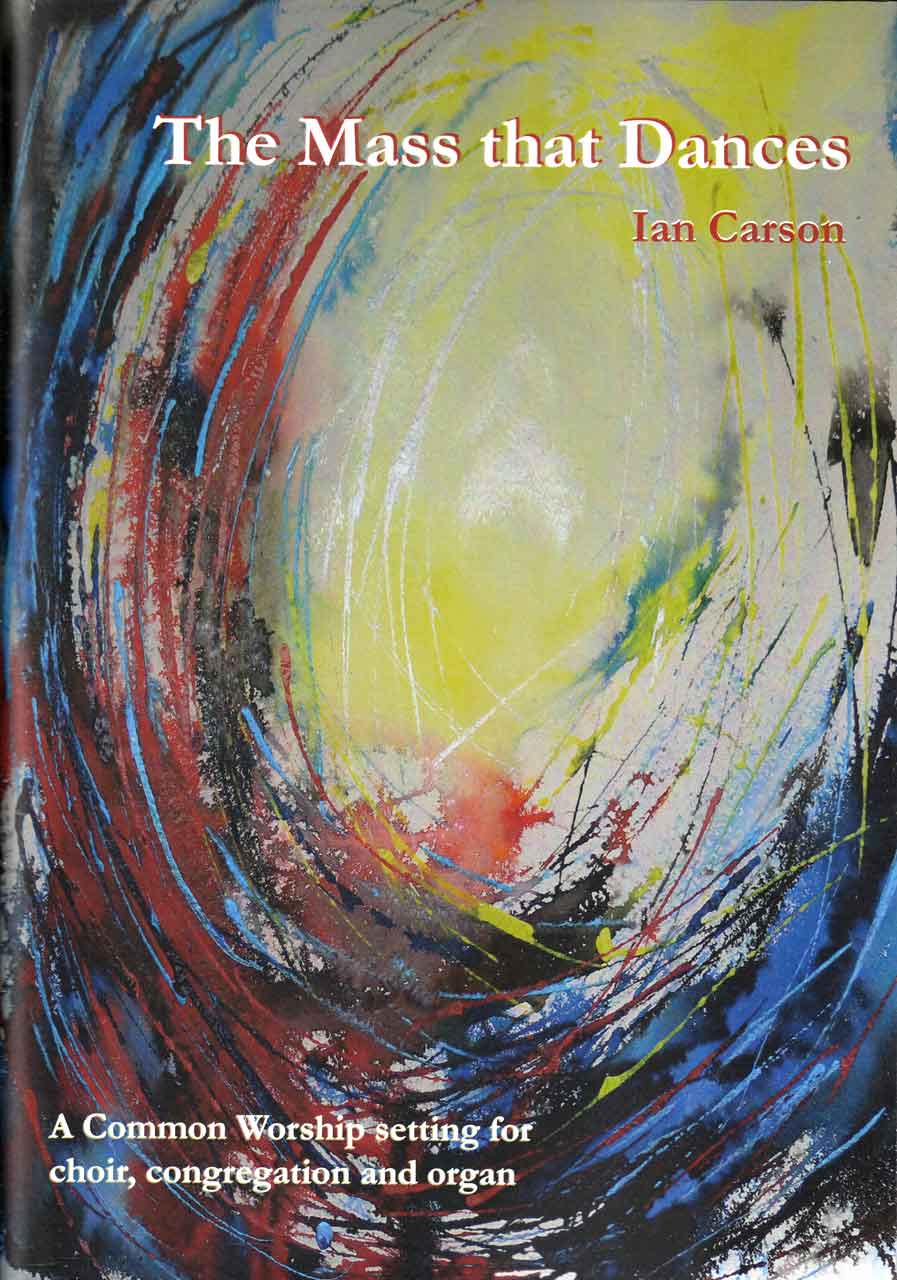
The Mass that Dances
Preface
A Communion Setting for choir, congregation, and organ
(Soprano solo and ad lib bongos in optional Lord’s Prayer setting)
My aspiration is that people will be moved to sing this Mass with fervour and emotion, that it helps them to feel involved in an atmosphere of worship. It was always in the back of my mind when planning the setting that much of Bach’s sacred choral music has secular dance rhythms somewhere in the background. Bach’s were all around him and contemporary to him, but I have included some ancient dance rhythms as well as some modern.
There is a significant T S Eliot quote at the head of the score:
At the still point (of the turning world), there the dance is.
This setting seeks to be as singable as possible by keeping the vocal range restricted, trying to avoid awkward intervals, giving space to breathe, and being repetitive without it becoming a negative feature. I have added a Prayer after Communion (with additions) to the normal Ordinary settings, firstly to allow a joyful ‘thankyou’ and secondly to prepare for taking our faith into the world outside the church doors. As with music of Bach’s period, I would expect Directors of Music to adapt and embellish the music as inspiration leads them.
The two most popular keys for Mass settings and hymns are d minor and Eb major, and this setting oscillates between the two, often slipping from one to the other. The Lydian mode features, and some echoes of Jazz, to distance the music from conventional major and minor. One piece by Bach colours most of the Mass, the theme for his wonderful C minor keyboard Passacaglia BWV582, which appears in part or complete in both major and minor, including becoming a chorale melody.
The Kyrie is a solemn Sarabande moving between the two featured keys, and the Gloria is a Ciacona on the Passacaglia theme over which all sing in Bossa Nova rhythm.
The Creed gains a sense of the inexorable by employing a march-dance rhythm, the contemporary Military Drill Dance, popular in American High Schools. A Cantor sings the Latin incipit to the music of Bach’s theme, which develops into a chorale. The content previews the Sanctus and recalls the Kyrie at appropriate points, as well as giving a foretaste of the Agnus Dei before an ending which affirms in proclaiming ‘Credo/I/we believe’ to music that demands total conviction.
The Sanctus and Benedictus become a Minuet and Trio – actually Minuet-scherzo – to liven up the tempo, as the song of the seraphim re-echoes across the heavens.
The optional Lord's Prayer setting is the one full solo (for soprano) in the Mass, accompanied by the choir, organ (chamber for preference) and ad lib bongos/drums, creating a meditative feel. A quotation from Dave Brubeck’s Take 5 heads the piece:
Just take five
Stop your busy day
And take the time out
To see if I'm alive.
In the setting the choir sing the Kaddish of the Old Testament God, set in relief by singing the intimate ‘Abba’ first, while the soloist sings the complete Lord’s Prayer.
The Agnus Dei (‘Jesus, Lamb of God’) is a Tango. I cannot bring to mind another dance whose formality in movement restrains such a gamut of powerful emotions. The ending is, I hope, transcendental.
The final Prayer after Communion is a joyous Balkan Dance, with the Sanctus and Gloria paying brief return visits, and the Chorale reminding us that going out of the church doors as the service finishes is not the end of the story, but the beginning.
The Mass that Dances demands close-up fervour and commitment in performance and is aimed at good parish church choirs with a positive congregation and an adventurous Director of Music.


