
What is the Lord’s meaning?
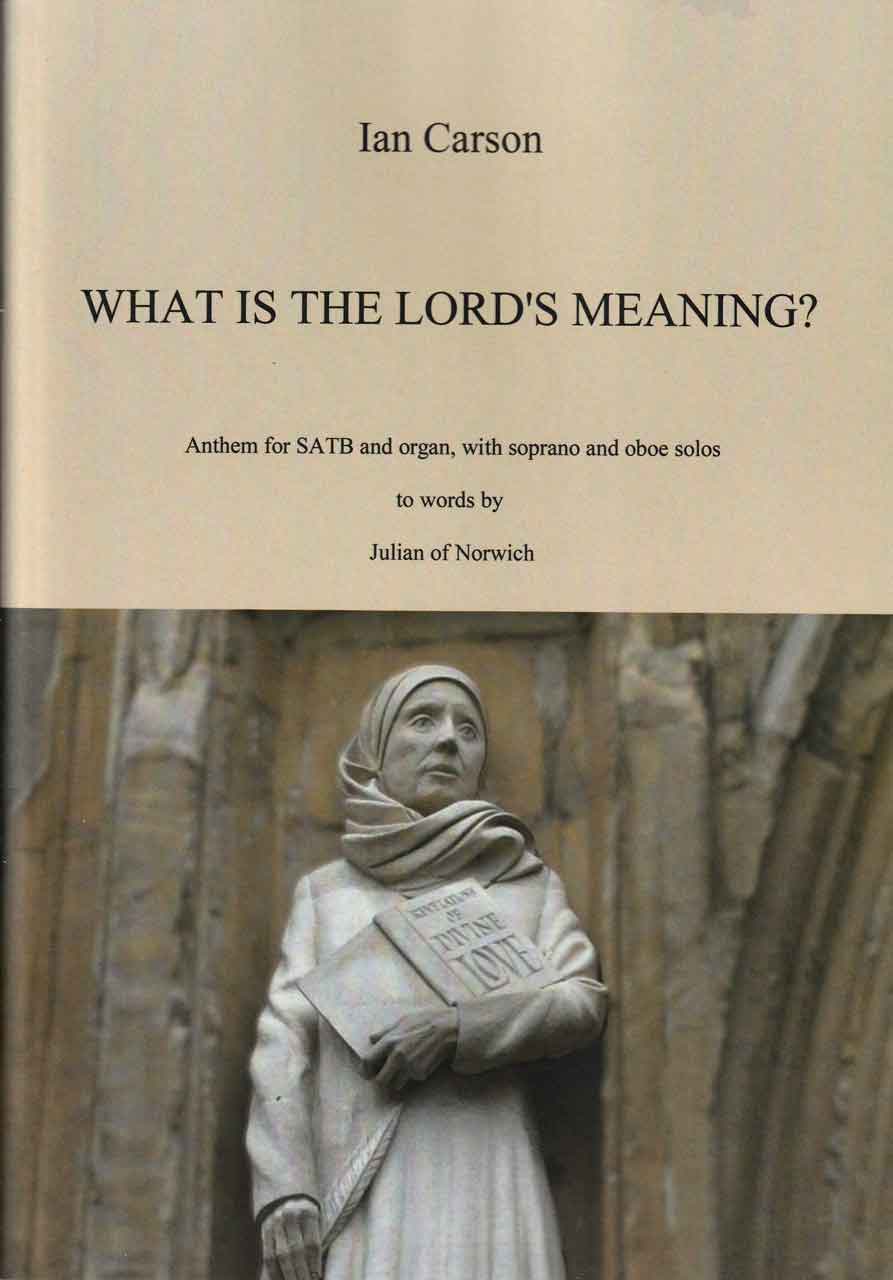
One could be forgiven for hoping that there would be a substantial memorial to Julian of Norwich, the first woman to write a book in English. There is the most dignified and gracious statue on the West front of Norwich Cathedral where only the title of the book she is holding ‘Revelations of Divine Love’ betrays her identity. She was an anchorite (walled in) at the church of St Julian (probably no connection), one of a mere 31 medieval churches in the centre of Norwich, and as for the church itself, it largely fell down through neglect in the nineteenth century, but was rebuilt only to be devastated by a German bomb, so has been rebuilt again, though the tower remains a stump. A modest building, you’d never find it if you didn’t know where it is.
Mother Julian’s anchorite cell has long gone, but there is a side chapel to commemorate her, appropriately simple and unassuming, one can imagine her counselling a passer-by that ‘I may make all things well, and I can make all things well, and I shall make all things well, and I will make all things well, and thou shalt see thyself that all manner of things shall be well.’ ...words that came to Julian in a series of visions when she was very ill, and which were re-echoed in the last century by CS Lewis and TS Eliot.
I set her words for my grand-daughter Lyra’s christening, and my son-in-law doubled the bass vocal line and oboe parts. The church was St Giles, Bradford on Tone (the river), a beautiful building whose origins are not much younger than St Julian’s, with stocks outside allegedly reserved for organists who play too many wrong notes, and ‘on occasion’ guarded by a magnificent feral peacock.


